peek
Exposes recorded browser sessions (rrweb DOM, console, network) to AI coding agents, fully local

rrweb-stack
Two OSS products on one rrweb-based substrate. Both ship as npm packages today.
| Product | One line | Install |
|---|---|---|
| tracelane | The recorder for your WebdriverIO and Playwright tests — Cypress on the roadmap. Self-contained HTML for every run — replay failures, audit successes, attach to any bug tracker. No SaaS, no dashboard, no signup. | npx @tracelane/cli init |
| peek | Your real browser, exposed to your AI coding agent over MCP — the agent reads recorded sessions and, with your explicit consent, drives the live page. Never leaves your machine. | npm install -g @peekdev/cli && npx peek init |
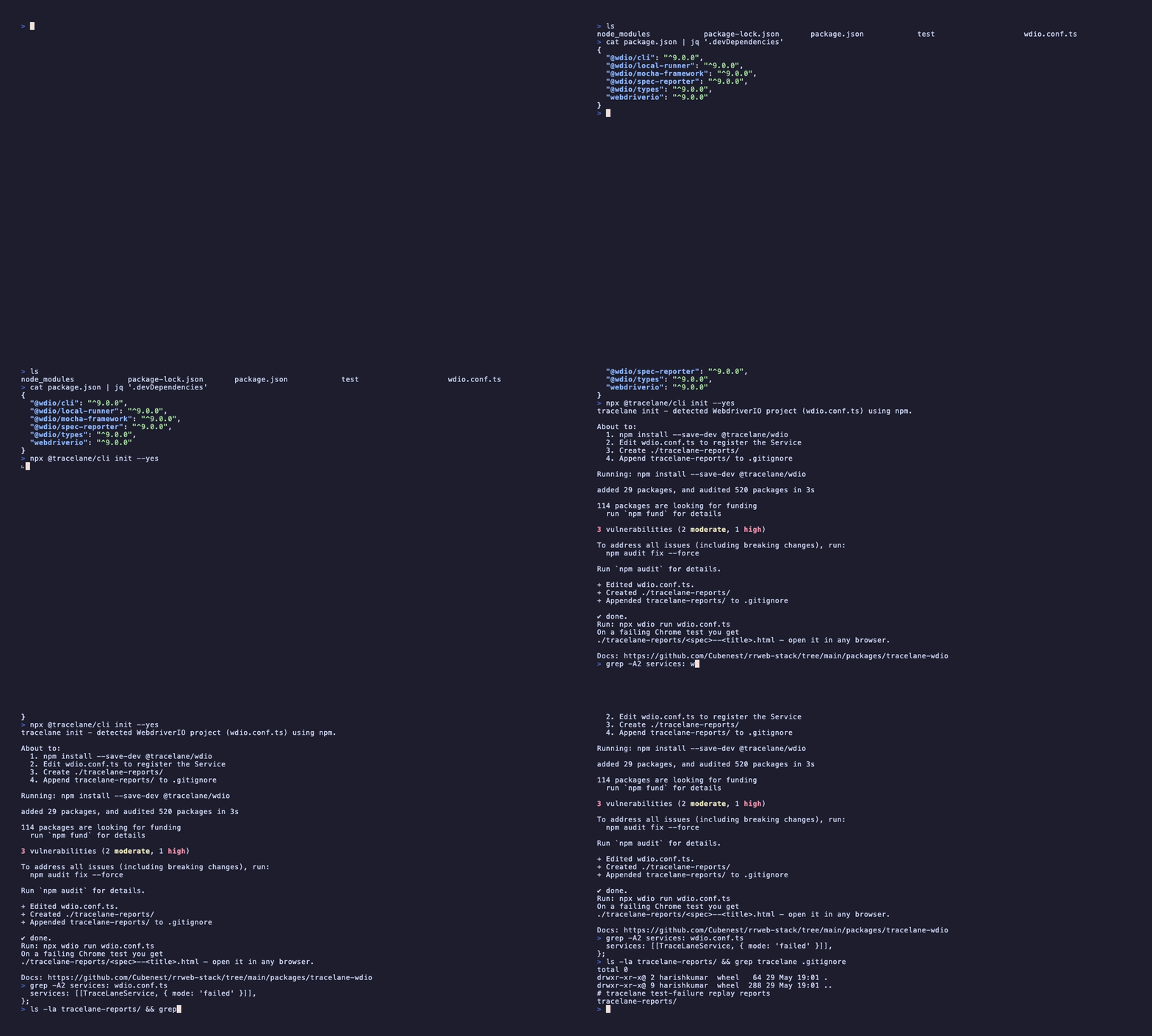
Above: npx @tracelane/cli init in a real WebdriverIO project — detect runner, install, edit wdio.conf.ts, ignore reports dir.
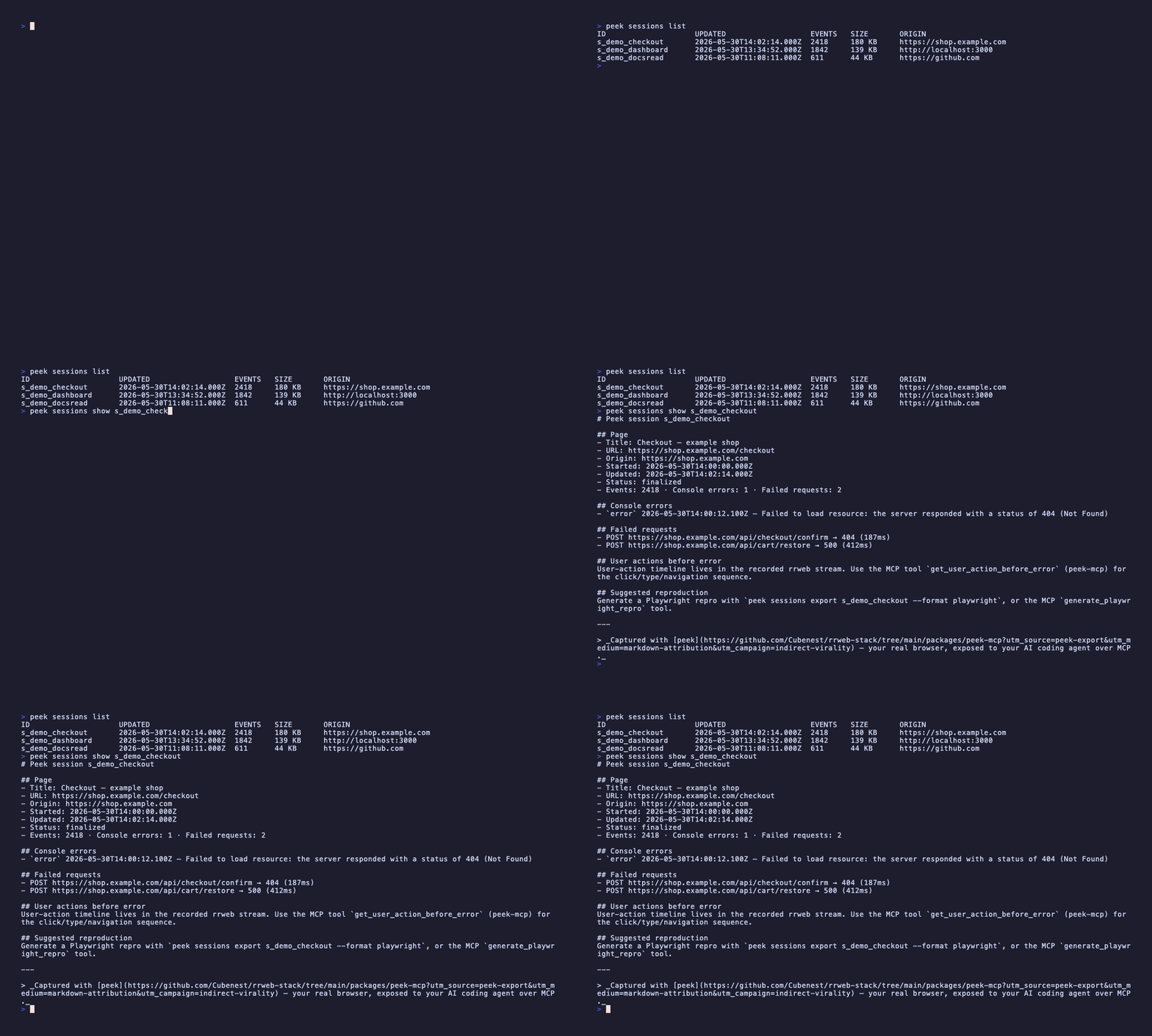
Above: peek sessions list then peek sessions show ... --format markdown — a recorded browser session as queryable structured output, AI-ready.






What's where
tracelane
| Package | Status | What it does |
|---|---|---|
@tracelane/wdio | alpha | WebdriverIO Service — capture + write HTML report |
@tracelane/playwright | alpha | Playwright Reporter + auto-fixture — capture + write HTML report |
@tracelane/cypress | planned | JSON-output adapter (no Test Replay overlap) |
@tracelane/core | alpha | Framework-agnostic capture engine — depended on by the adapters |
@tracelane/report | alpha | Self-contained HTML report builder |
Docs: tracelane.cubenest.in (source under apps/tracelane-docs/). The tracelane-wdio README is the right starting point.
peek
| Package | Status | What it does |
|---|---|---|
@peekdev/cli | alpha | peek init installer + peek sessions query / export |
@peekdev/mcp | alpha | stdio MCP server — exposes captured sessions, plus consent-gated live read + act tools, to Claude Code, Cursor, Cline, Windsurf |
peek-extension | alpha · on the Chrome Web Store | Chrome MV3 extension — the real browser, recorded |
Docs: peek.cubenest.in (source under apps/peek-docs/).
peek requires Node.js ≥ 22. Its native
better-sqlite3dependency only ships prebuilt binaries for Node 22+; on older Node (notably Windows, which has no C/C++ toolchain by default) the install falls back to compiling from source and fails.
Shared substrate
@cubenest/rrweb-core — vendored PostHog rrweb fork, PII masking primitives, large-DOM throttling, screenshot fallback, network/console capture abstractions, compression helpers. Used by both products. The fork is pinned by SHA + the substrate's NOTICE attributes both PostHog's plugin lineage and the upstream rrweb roots.
Why two products, one repo
Same recording engine, same trust model, two different consumer surfaces:
- tracelane ships test-time captures into a self-contained HTML artifact your team and AI agents can read offline.
- peek ships live-browser captures into an MCP server your AI coding agent can query — and, with your explicit per-origin consent, drive the live page through.
peek's live read + act tools are gated by a five-level per-origin permission model (0 Off → 1 Read-only → 2 Suggest-only → 3 Act-with-confirm → 4 YOLO, the default is Level 1) with a destructive-action blocklist that always prompts. No telemetry, no cloud — everything stays in ~/.peek.
Shared upstream means one fork to track, one masking surface to harden, one license + DCO + security policy.
Pre-launch state
Pre-1.0. Alpha packages live on npm. Branch protection is on main (PR + CI + DCO + linear history). All workflows use Trusted Publishing OIDC + SLSA provenance. Renovate runs with a 7-day cooldown (21 days for the @posthog/rrweb lineage) and config:best-practices. tracelane has publicly launched (npm alpha + a live demo report); peek is alpha on npm and its Chrome MV3 extension is available on the Chrome Web Store.
Security
Report a vulnerability via SECURITY.md. The shared threat model for both products lives in docs/SECURITY-NOTES.md.
License
Apache-2.0. See LICENSE.
Contributing
Apache 2.0. DCO sign-off required on all contributions. See CONTRIBUTING.md, CODE_OF_CONDUCT.md, SECURITY.md.
Sponsor / support
- GitHub Sponsors — github.com/sponsors/harry-harish (opening for launch)
- The work is open-source and sustainable; sponsorship keeps it that way. See
docs/SUSTAINABILITY.mdfor the maintenance cadence.
Installation
Source-derived launch command. Check the maintainer’s required arguments and credentials before running:
npx -y @peekdev/mcpSet up in your AI client
Merge this template into ~/Library/Application Support/Claude/claude_desktop_config.json. Keep existing servers. Add any arguments, credentials, and permissions required by the maintainer; this template has not been install-tested.
{
  "mcpServers": {
    "io-github-cubenest-peek-mcp": {
      "command": "npx",
      "args": [
        "-y",
        "@peekdev/mcp"
      ]
    }
  }
}
Restart Claude Desktop completely for changes to take effect. Confirm the server appears connected in the client’s tool list, then try a read-only example from its documentation.
Claude Desktop setup referencePackage
Compatible MCP Clients
peek works with any MCP-compatible client. Copy the config snippet from the Configuration section above and add it to the file shown for your client, then restart the application.
- Claude Desktop
~/Library/Application Support/Claude/claude_desktop_config.jsonRestart Claude Desktop completely for changes to take effect. - Cursor
~/.cursor/mcp.jsonRestart Cursor for changes to take effect. - VS Code
.vscode/mcp.jsonReload VS Code window for changes to take effect. - Windsurf
~/.codeium/windsurf/mcp_config.jsonRestart Windsurf for changes to take effect. - Claude Code
.mcp.jsonSave at the project root, then start Claude Code in that project and review the MCP server approval prompt. Keep real credentials out of shared files.