Stuga
Agent edits await review by default in a self-hosted workspace for documents and databases.

Stuga
AI suggests. You decide.
Self-hosted documents and databases where edits from Claude Code, Codex or any MCP client arrive as tracked changes and, by default, land only when a person accepts them. Use it on your own or with your team.
Download for Mac (Apple silicon, macOS 13+) · Install with Docker
Install, then create your account and workspace and connect an agent. Help for people using Stuga: stuga.dev/docs.
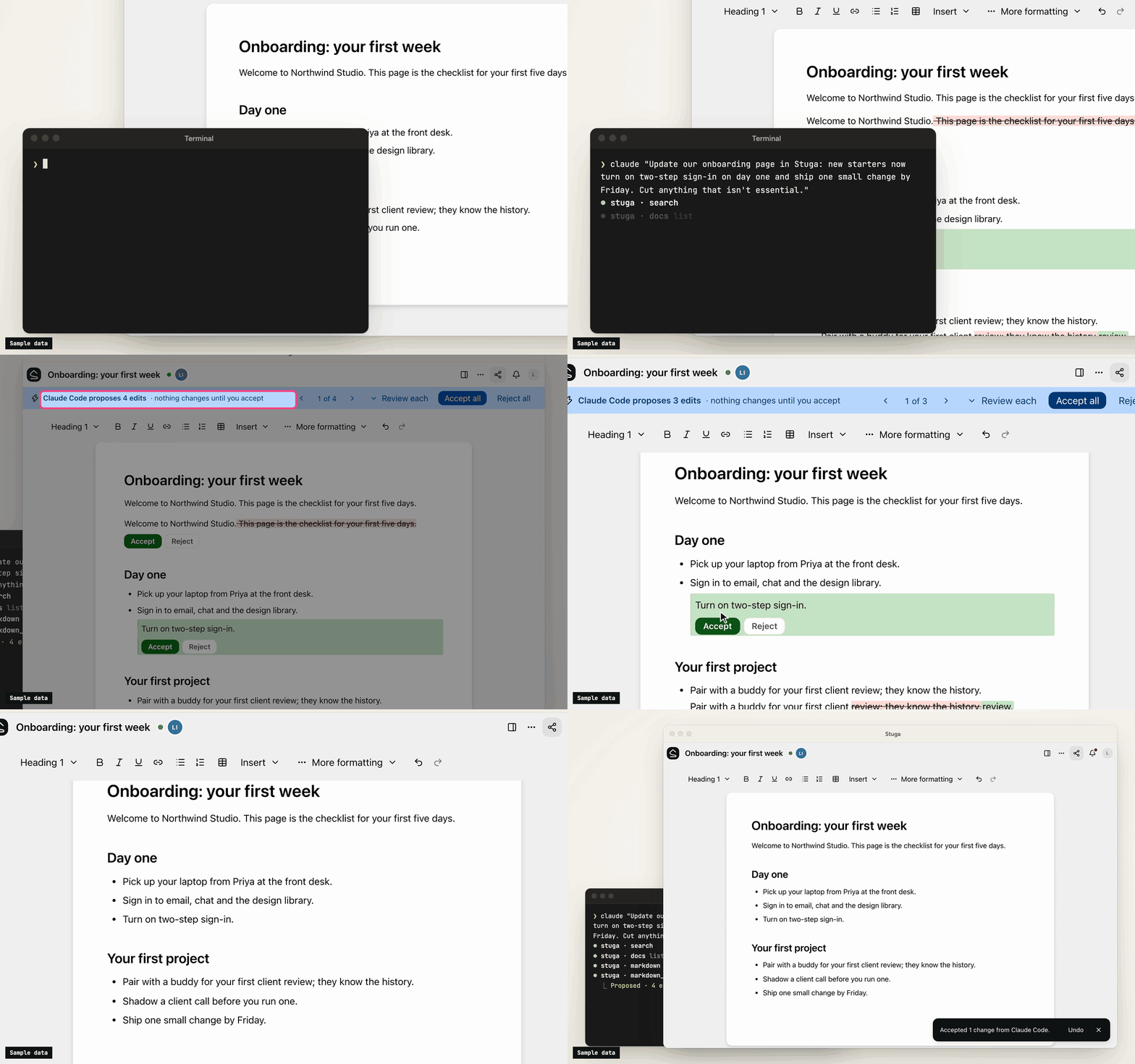
How agent edits work
- Review by default. An agent's changes wait for a person, who is notified and accepts or rejects each one in the document or table. Nothing lands on a timer.
- Nobody is blocked. Collaborators never see pending agent text and keep editing. The agent carries on, and its later reads include its own pending edits.
- Or apply at once. The owner of a document or database, or a workspace admin, can choose Let AI edits apply directly. Changes then land at once, recorded, attributed and revertible.
- A run per session. Each run records the agent, the person it acts for, the client and model it reported, and every change. Review AI edits lists the runs that need someone.
- Who wrote this? An agent can ask a document which passages agents wrote and whether a person accepted them.
- Instructions that stack. The workspace, folders, documents and databases can each carry instructions for agents. They advise the model; permissions and review decide what a write does.
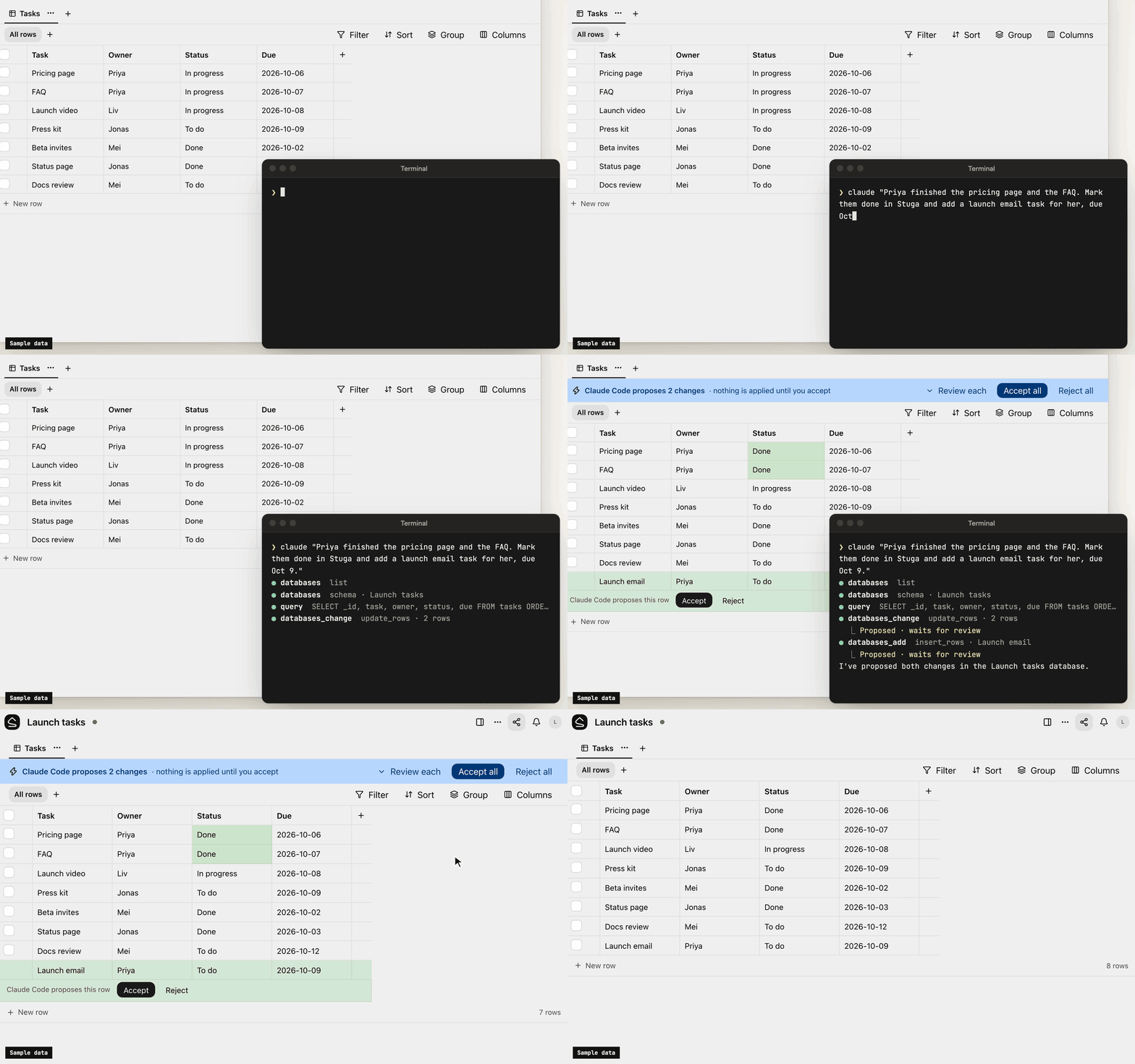
What's in it
- Documents written together. Real-time editing (Tiptap over a Yjs CRDT) with presence, comments, @mentions and version history.
- Databases with SQL. Typed tables beside your documents, each database its own SQLite file, with saved views, row pages and CSV import. Agents, Ask and the REST API run read-only SQL on them.
- Search that follows permissions. Keyword (BM25, pg_search) and semantic (pgvector) search in one SQL statement, with access checked inside it. Chinese and Japanese are split into words.
- Built-in AI, off until set up. A co-author and a table assistant, whose edits are reviewed like an agent's, and Ask, which cites sources. OpenAI, Anthropic, Gemini, DeepSeek and more, or Ollama.
- Sharing and sign-in. Workspaces, folders, per-document sharing, groups and guests. People join by invite link and sign in with a password or your OpenID Connect provider.
- Import and export. A Notion export, or a zipped Obsidian vault or folder of Markdown, becomes a
workspace; a workspace exports as one
.stuga.zipof Markdown, JSON Lines and its files.
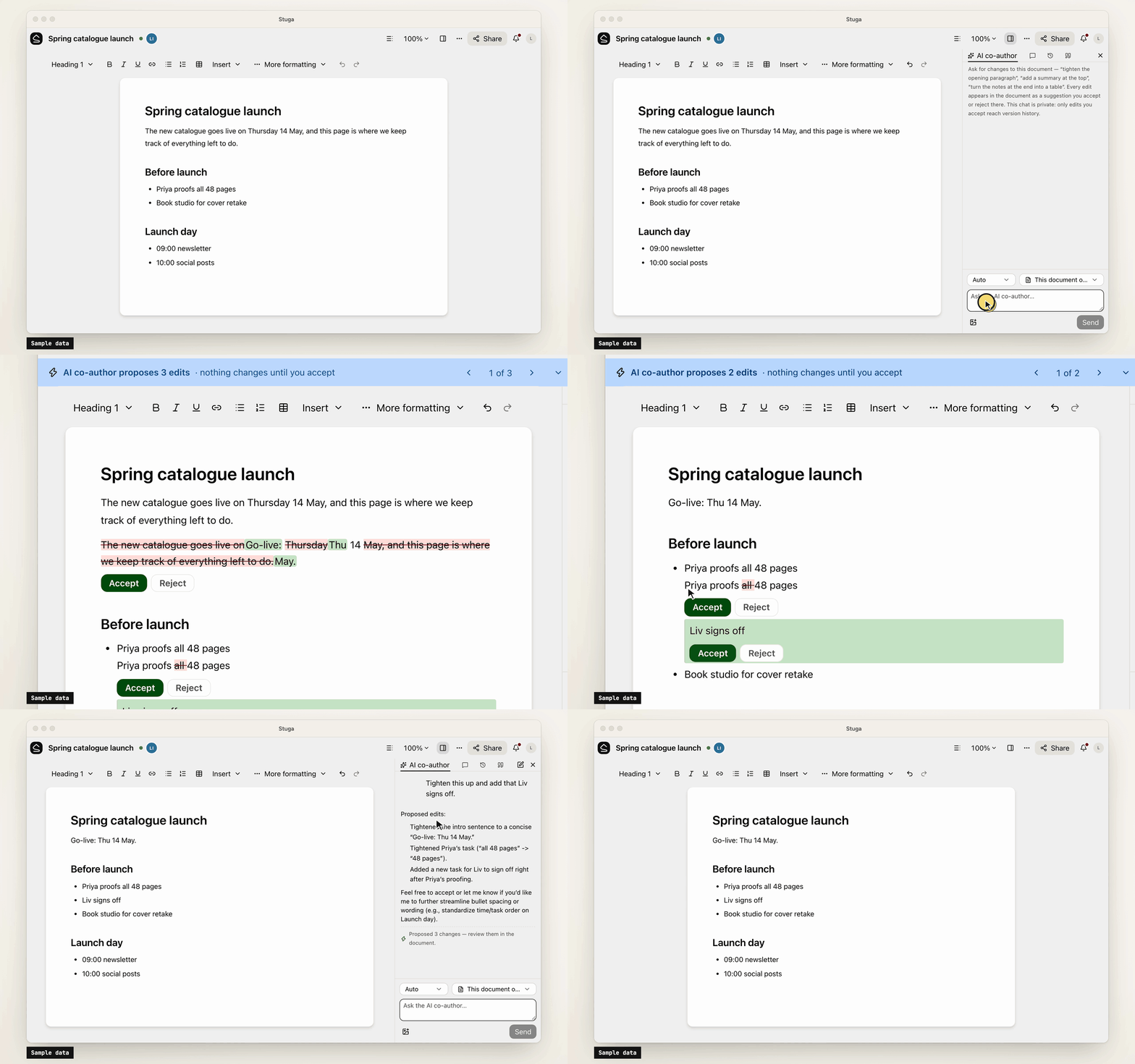
Connect your agents
Agents connect over MCP. Settings → Your AI agents gives the setup for Claude Code, Claude Desktop, Codex, Antigravity, Cursor, VS Code, Kiro, Goose, LM Studio, DeepSeek Harness and Pi, with your node's address filled in, and the URL any other MCP client needs (docs/agents.md). Each agent brings its own model, so the node needs no AI key.
- Scoped sign-in. Most clients sign in through the browser, where you tick the workspaces an app may use and choose Read only or Read and suggest changes. Revoke ends its access.
- Narrow keys. A client without sign-in uses an API key, which can be confined to folders, made read-only or given an expiry.
- Content only. Agents change documents and databases. Renaming, moving, deleting, sharing and the review setting stay with people.
- Full audit. Every MCP call, reads included, is in the workspace's audit log. An event feed and signed webhooks report what changed.
Your data
Stuga sends no telemetry, and nothing reaches us unless a node admin turns on remote access. The node makes outbound requests only for features in use, such as an AI provider, and asks GitHub once a day for the list of releases unless a node admin turns that off. docs/privacy.md lists what the node sends and stores.
Install
-
A Mac with Apple silicon, on macOS 13 or later: open Stuga.pkg. It carries its own Postgres and Node.js (docs/install/macos.md).
-
Docker on x86-64 or arm64, such as a Linux server or a NAS:
install.shstarts Postgres and the node with Compose (docs/install/docker.md):curl -fsSL https://github.com/stuga-dev/stuga/releases/latest/download/install.sh | bash
A node is one Node.js process and Postgres with pgvector and pg_search; people open it in a browser. It backs itself up every day by default and before every upgrade (docs/operations.md). docs/getting-started.md walks through the first hour.
Questions and feedback
Ask a question or share an idea in Discussions; report a bug as an issue.
Contributing
Issues and pull requests are welcome. CONTRIBUTING.md covers running Stuga from source, the tests and the conventions, and RELEASING.md how a release is cut. Contributions are accepted under a Contributor License Agreement (CLA.md); a bot asks on your first pull request. Report a vulnerability privately, as SECURITY.md describes.
License
AGPL-3.0-only, except integrations/, which is MIT; copyright notice in NOTICE. If you modify Stuga and offer it to others over a network, you share your changes under the same terms. The name and logo are not covered by the license: TRADEMARKS.md says how you may use them.
Installation
Source-derived launch command. Check the maintainer’s required arguments and credentials before running:
npx -y @stuga/mcpSet up in your AI client
Merge this template into ~/Library/Application Support/Claude/claude_desktop_config.json. Keep existing servers. Add any arguments, credentials, and permissions required by the maintainer; this template has not been install-tested.
{
  "mcpServers": {
    "dev-stuga-stuga": {
      "command": "npx",
      "args": [
        "-y",
        "@stuga/mcp"
      ]
    }
  }
}
Restart Claude Desktop completely for changes to take effect. Confirm the server appears connected in the client’s tool list, then try a read-only example from its documentation.
Claude Desktop setup referencePackage
Compatible MCP Clients
Stuga works with any MCP-compatible client. Copy the config snippet from the Configuration section above and add it to the file shown for your client, then restart the application.
- Claude Desktop
~/Library/Application Support/Claude/claude_desktop_config.jsonRestart Claude Desktop completely for changes to take effect. - Cursor
~/.cursor/mcp.jsonRestart Cursor for changes to take effect. - VS Code
.vscode/mcp.jsonReload VS Code window for changes to take effect. - Windsurf
~/.codeium/windsurf/mcp_config.jsonRestart Windsurf for changes to take effect. - Claude Code
.mcp.jsonSave at the project root, then start Claude Code in that project and review the MCP server approval prompt. Keep real credentials out of shared files.